LAWYER
VICTORIA VDOVYCHENKO

.webp)

In Ukraine's energy sector, the NEURC—the National Energy and Utilities Regulatory Commission—plays a pivotal role. Its activities directly impact all market participants, from individual consumers to large businesses. While the regulator's primary goal is to balance the interests of the state, businesses, and consumers, and to ensure energy security (as per Article 3 of Law No. 1540-VIII "On the NEURC"), its decisions are not always lawful or fair in practice.
What should you do if the NEURC violates your rights? Naturally, you must defend them, and the law firm Fedotov & Partners knows how to do just that. We have extensive experience in challenging regulator decisions, specializing specifically in the energy sector. We develop tailored defense strategies based on your unique situation and provide full support throughout the litigation process.
For market participants such as traders, suppliers, or producers, the primary legal protection mechanism is filing a lawsuit. Through the courts, you can challenge the suspension or revocation of licenses, the imposition of fines, and other regulatory decisions that infringe upon a company's rights or legitimate interests.
Important: Courts do not interfere with the content of regulatory acts, but they do oversee the limits of authority and procedural compliance. As a result of judicial review, the actions or inaction of a regulatory body may be deemed unlawful, provided that the plaintiff can prove their rights have been violated.
What the court can do:
The latter outcome means the plaintiff has lost the case, but this is not necessarily the final word. If you disagree with the court of first instance's decision, you can file an appeal, and subsequently, a cassation complaint. The multi-tiered judicial process increases the chances of a fair outcome. Note that the Court of Cassation is the final instance, and its decision is not subject to further appeal.
Furthermore, judicial protection is not just about the formal issuance of a decision, but also its actual enforcement, which guarantees the full restoration of the market participant's violated rights.
In other words, turning to the courts is an effective way to protect a plaintiff's rights, recover damages, and halt unlawful actions by the regulator. It also serves as a mechanism that encourages regulatory bodies to strictly adhere to current legislation and prevent discrimination.

Interesting Case Studies:
The regulatory body is vested with discretionary powers, which provide significant freedom in making management decisions and the ability to act at its own discretion. However, even such powers can be subject to judicial review for legality if there is a suspicion of abuse or a violation of consumer rights. These powers must not conflict with the fundamental rights of market participants. To maintain a balance, the following principles are applied:
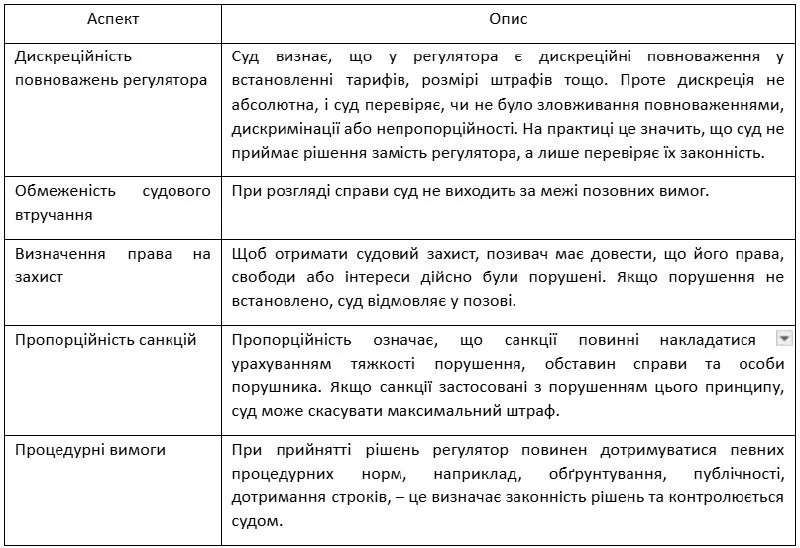
Therefore, the court will not overturn a regulator's decision if it is lawful and made without violating any rights. For a case to be heard in court, the fact that a company's rights have been violated must be proven. In this way, the court ensures a balance between the regulator's authority and the legal rights of energy market participants.

When ruling on the regulator's liability in a lawsuit, the court analyzes the following key conditions:
Filing a complaint with the regulator or a lawsuit in court is a complex legal procedure, yet it is vital for protecting the legitimate interests of energy companies and consumers. It requires not only drafting the application correctly and preparing a complete set of documents but also having a thorough command of the legislative framework and legal expertise. Fedotov & Partners offers professional support in such cases. Our team will be with you every step of the way—from analyzing the situation to securing a favorable ruling. We have a deep understanding of the legal nuances of the energy sector and extensive experience in these matters. Submit an application online, email us, or call: +38 (068) 444-70-88.

.jpg)

.jpg)

.jpg)



.jpg)
.webp)