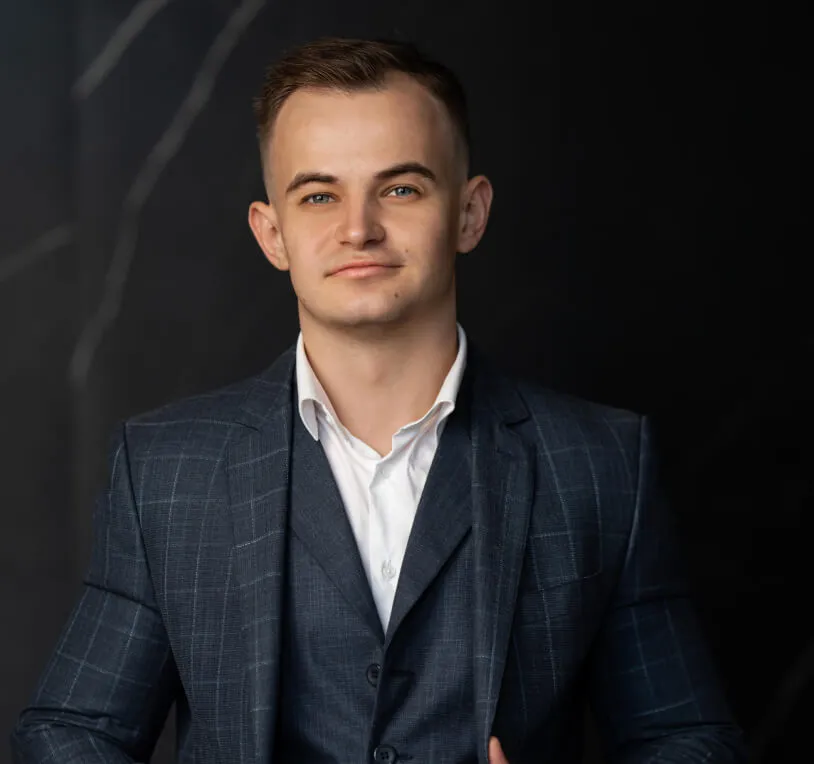
Partner, Attorney
Vitalii BULAT

.jpg)

Vitalii Bulat, a partner at FEDOTOV & PARTNERS, participated in a meeting of the National Security and Defense Council of Ukraine’s working group on addressing threats in the energy sector.
July 1 Vitalii Bulat, a partner at FEDOTOV & PARTNERS, addressed the working group on addressing threats in the energy sector of the NSDC with a report on the systemic legal uncertainty surrounding the 10% price adjustment limit in public electricity procurement.
In his speech, he analyzed how a single provision in Clause 2, Part 5, Article 41 of the Law "On Public Procurement" led to conflicting rulings by courts of cassation, two Grand Chamber of the Supreme Court resolutions, constitutional complaints, administrative challenges to government decrees, thousands of prosecutorial lawsuits, and criminal proceedings. This is not an isolated judicial error, but a systemic problem that threatens the energy supply of critical infrastructure.
The Grand Chamber’s Controversial Position
The Grand Chamber of the Supreme Court confirmed twice—in January 2024 and November 2025—that the 10% limit is cumulative for the entire duration of the contract. The Court justified its conclusion through a teleological interpretation, effectively taking out of context a rationale that originally applied to a completely different instrument: the mechanism for abnormally low prices. This new position of the Grand Chamber began to be applied retroactively to agreements concluded before its inception, at a time when suppliers were acting in accordance with the position of the administrative cassation court and official clarifications from the Ministry of Economy.
Legislative Correction
Vitalii Bulat emphasized that the new Law "On Public Procurement" (No. 4888-IX), adopted on May 27, 2026, resolved this long-standing ambiguity: 10 percent is now the limit for each individual price change, rather than a cumulative cap. The provision was applied retrospectively to legal relations dating back to 2016. Parliament effectively confirmed that the Grand Chamber's previous interpretation was incorrect.
State Inconsistency
A specific focus of the report was on double standards: while the prosecutor's office challenges suppliers' supplementary agreements, the prosecutor's offices themselves and the bodies supporting court operations enter into the exact same agreements in their own procurement processes. The state legitimizes this behavior for itself while prohibiting and even criminalizing it for private suppliers.
In conclusion, Vitalii Bulat noted that legal certainty in this area is not an abstraction, but a very concrete issue: whether hospitals, water utilities, and municipalities will have electricity suppliers willing to participate in tenders next winter. If a long-term contract means guaranteed losses and the risk of criminal proceedings, suppliers will leave the market, and the state will end up not with cheap electricity, but with failed procurements and a threat to the energy supply of critical infrastructure.


.jpg)
.jpg)



.jpg)
.webp)